
Review
Bloom Growth Review 2026: The Outdated Software Your Team Will Hate Using
Last updated May 30, 2026 · Written by Jeremy Chatelaine
Bloom Growth was once the default BOS choice for EOS® teams, but in 2026 many operators find it dated, clunky, and hard to justify on annual contracts.
Summarize with ChatGPTSummary
Bloom Growth still offers useful meeting, scorecard, and accountability tools, but we find that its dated interface, learning curve, uneven mobile experience, annual contracts, and high starting cost make it difficult to recommend for teams that want a lightweight, modern operating system.
Introduction
If you're running your business on a framework like EOS® (Entrepreneurial Operating System), Scaling Up, or Pinnacle, you know the "glorified spreadsheet" approach only works for so long. Eventually, you need a central nervous system.
Enter Bloom Growth (formerly Traction Tools).
As one of the original players in the business operating system (BOS) software space, Bloom Growth has long been the go-to platform for teams that want a disciplined approach to meetings and metrics.
But with newer competitors like Ninety, MonsterOps, and Strety nipping at its heels, does Bloom still hold the crown?
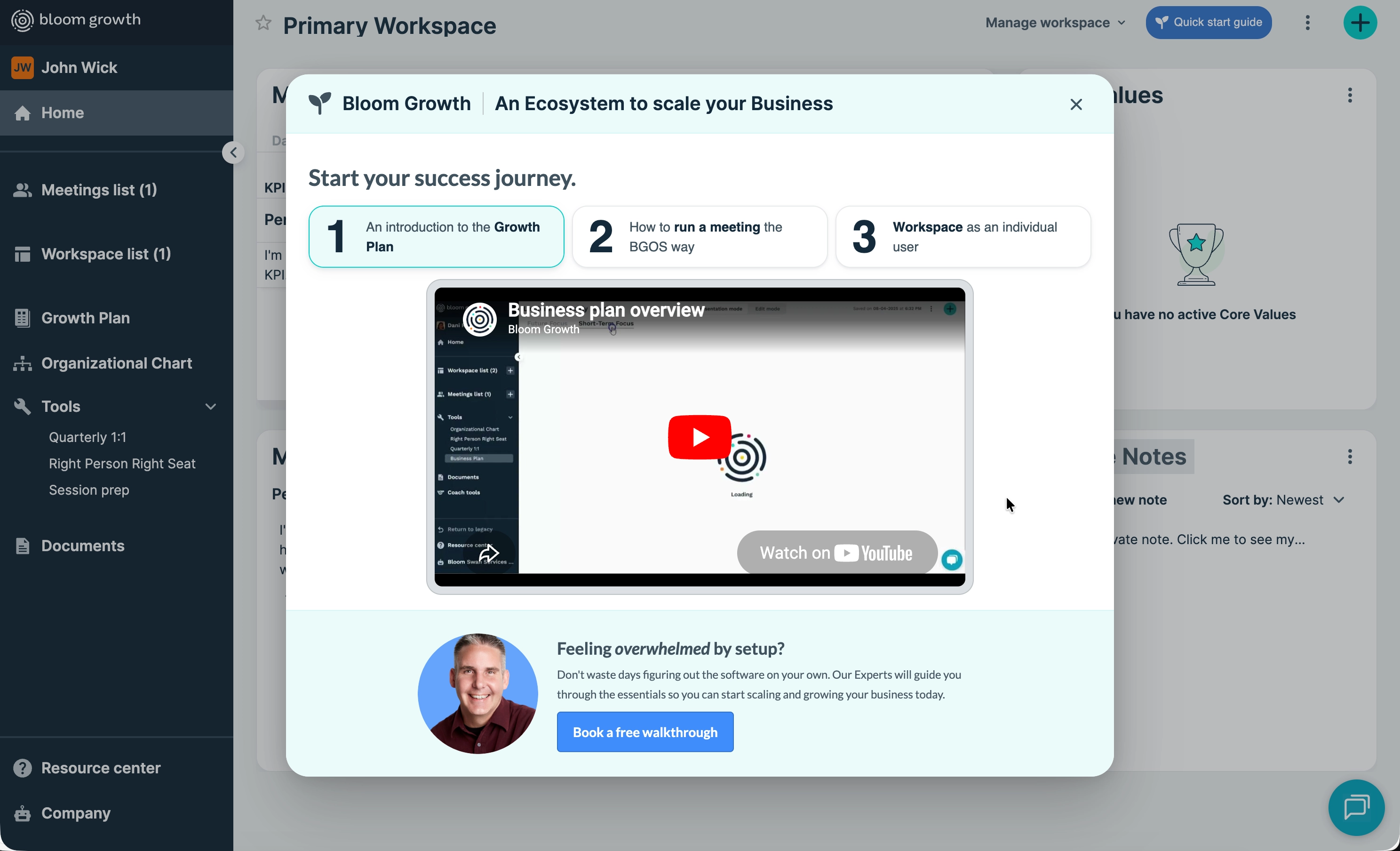
What is Bloom Growth?
Bloom Growth is a cloud-based platform designed to help leadership teams run more effective meetings, track KPIs, and manage long-term goals.
Originally built specifically for EOS®, the company has since rebranded and repositioned itself as "OS-agnostic."
Whether you follow a specific framework or have built your own system, Bloom's tools, like the Scorecard, Accountability Chart, and L10 meeting module, are designed to adapt to your approach.
Features
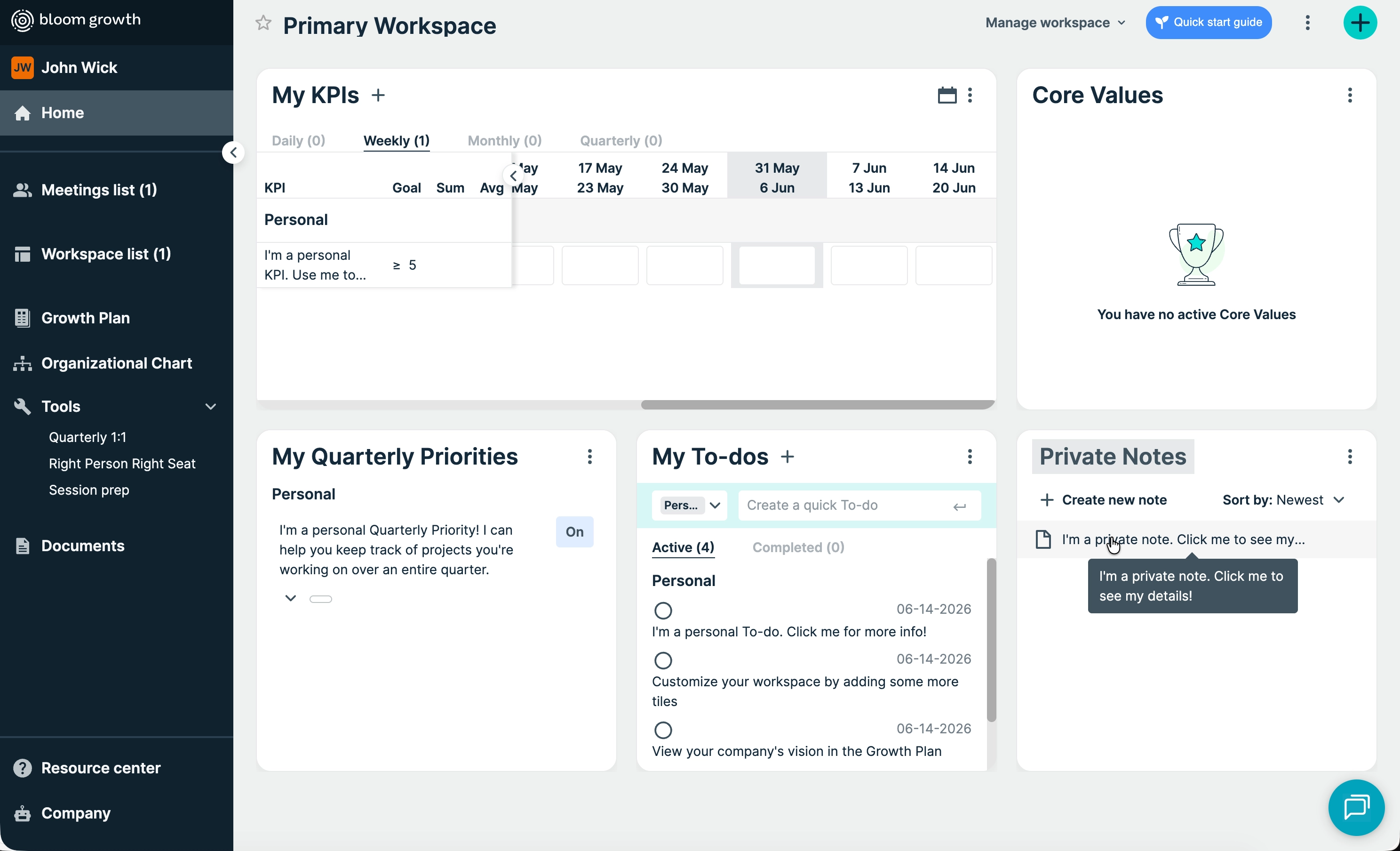
While Bloom Growth offers a full suite of business management tools, three core features stand out.
- Meetings: Provides a highly structured environment for running all types of meetings, with automated timers, instant distribution of meeting minutes, and a "star voting" system that ensures high-priority issues are addressed first.
- Metric Scorecards: Allow advanced tracking across daily, weekly, monthly, and quarterly cadences, using "Trend Mode" and custom formulas to transform raw data into actionable visual insights.
- Accountability Chart: Goes beyond a simple org chart by clarifying roles and responsibilities through a drag-and-drop interface. It also integrates directly with the platform's "People Tools," enabling more objective quarterly performance reviews.
The Good
1. Support & Resources
If there's one theme that dominates Bloom Growth reviews, it's customer service. Unlike many SaaS companies that hide behind chatbots, Bloom provides dedicated Success Managers and live Bloom Growth Coaches (which you pay for). Users frequently mention that the onboarding experience feels more like a partnership than a typical software rollout.
2. Customization is King
While competitors often lock you into a rigid system, Bloom allows for significant customization. Like MonsterOps, you can change the terminology (don't like the word "Rocks"? Rename it to "Priorities"), adjust meeting agendas, and create custom workspaces. The help center articles also highlight a deep level of flexibility in how metrics can be viewed and shared across different teams.
3. Meetings
Running a meeting in Bloom feels structured and locked in. The software manages the timer, guides you through each section (Check-In, Scorecard, To-dos, IDS), and automatically emails the meeting minutes to everyone the moment you hit "End Meeting." It eliminates the "What did we decide?" amnesia that plagues most startups.
The Bad: Where It Falls Short
1. The Learning Curve
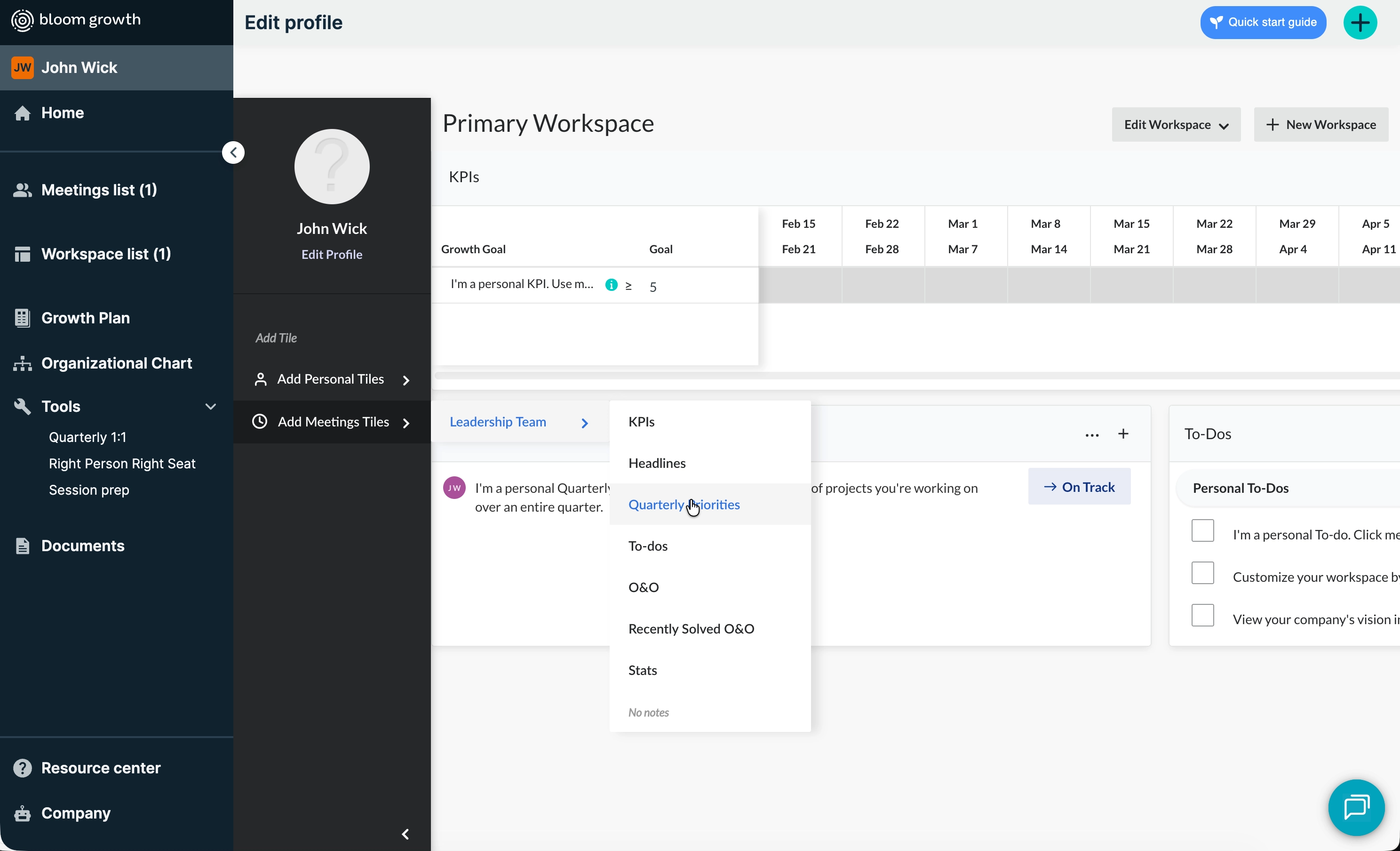
Bloom Growth is powerful, but it isn't always "plug-and-play." New users may feel confused or hesitant to adopt it, as the interface can come across as dated or "clunky" compared to sleek, modern platforms like MonsterOps. Some help articles even reference a recently launched "New Meeting Experience" aimed at addressing these concerns. Still, many users say they can't quite shake the underlying sense of friction that comes with what feels like an outdated and occasionally awkward interface.
2. Weak Extra Features
While Bloom is strong at tracking company goals, its "People Tools" (such as Quarterly 1:1s and the People Analyzer) may not feel as robust as some teams would expect. If you're looking for a comprehensive HR performance management suite, Bloom can come across as "trying to do too much" without fully mastering the reporting and analytics side of HR.
3. Mobile Experience
A common refrain on Reddit and G2 is that the mobile app doesn't live up to the desktop experience. In a world where founders need to add an "Issue" or check off a "to-do" on the fly, a laggy mobile interface can quickly become a dealbreaker, especially when improvements seem to roll out slowly.
Pricing
Bloom Growth's pricing is tiered based on the level of assistance you're looking for:
- Bloom Core: Starts at around $249/month (includes 25 users). This is the standard self-serve software tier.
- Bloom Accelerate: Around $499/month (for 25 users). This includes more intensive coaching and quarterly planning support.
- Additional users: Add $5 per user/month (billed $60/year), beyond the initial 25.
Contracts are annual. They lock you in for a year, which makes it harder to change course if the platform isn't the right fit (which you'll only know after trying). If you decide to switch to another solution, you may end up paying for several months of software you're no longer using.
Final Thoughts
While Bloom Growth was once the undisputed leader in the space, the reality in 2026 is that it's beginning to show its age, with no indication that meaningful change is on the horizon.
For many teams, what was once considered "flexibility" now feels like a clunky, over-engineered experience, more like wrestling with a database than running a business.
On top of that, the $249/month entry point and annual commitment ($2,988) can be hard to justify in today's market, especially when more modern, intuitive competitors offer sleeker interfaces, flexible contracts and stronger performance tracking at a fraction of the cost.
If you're not prepared to dedicate a full-time administrator to managing the platform's quirks, you may find yourself paying a premium for features your team adopts reluctantly, if at all.
Before locking yourself into their ecosystem, it's worth exploring more agile alternatives that prioritize user experience over operational complexity.
How MonsterOps Compares
We built MonsterOps for the whole team: executives, managers, and individual contributors alike. Everyone gets their own login at no extra cost.
MonsterOps is designed so there's no need for training sessions, onboarding calls, or admin manuals. You open it, understand it, and get instant answers from the AI. The interface is fast, clean, and never makes you feel like you're filing a tax return.
MonsterOps offers unlimited users for a flat fee with month-to-month billing available. It doesn't matter if you have 11 people or 100. There is no need to manage licenses or calculate whether it's worth giving your whole team access.
Bloom starts at $249/month for 25 people, billed yearly. MonsterOps is $129 month-to-month or $99/month billed annually, with unlimited users.

Amber
"We transitioned away from Bloom Growth's high costs and the manual clutter of spreadsheets. The experience has been fantastic. The platform is simple, straightforward, and intentionally avoids the 'extra noise' that makes other tools hard to adopt."
Cost calculator: MonsterOps vs Bloom Growth plans
Based on Bloom pricing: Core is $299/mo monthly or $249/mo billed yearly; Accelerate is $499/mo with annual engagement. Includes 25 users, then +$5/user/mo.
MonsterOps
$129/mo
$129/mo month-to-month with unlimited users.Bloom Growth Core
$299/mo
$299/month. The base plan includes up to 25 users.Bloom Growth Accelerate
$499/mo
$499/month. The base plan includes up to 25 users; annual engagement only.Check out MonsterOps
MonsterOps is built for founders who want a faster, more intuitive operating system without the friction of legacy tools.